Thursday, March 5, 2015

Posting 8: Weekend Retreats

Don and I have been working hard, so we took some time over the weekends to visit new sights in Kenya.

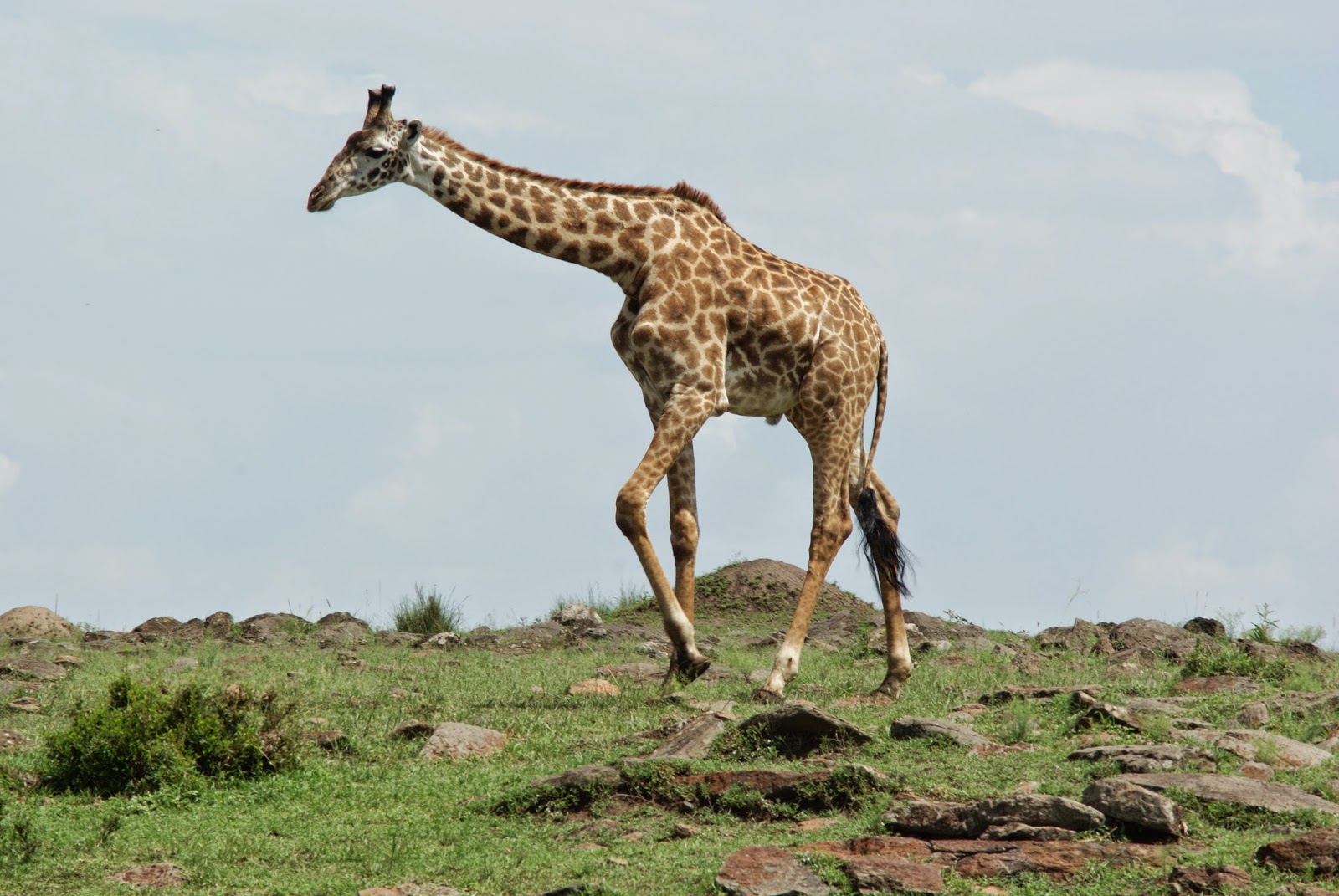
On February 22nd, we lunched at the Giraffe Manor--a boutique hotel in Nairobi.  Besides being a lovely property with great food, nine giraffes and many warthogs run free on the property.  If you stay overnight, the giraffes wake you up in the morning by bopping their heads through your window looking for breakfast.  We only visited for lunch, but still were able to feed the giraffes and give them a good hug.  (We've decided that giraffes are our favorite animals.)

We celebrated Don's birthday last weekend by going on a Safari to Amboseli.  We took a short flight on a four-person plane, landing in the bush.  It was brutally hot during the day (sorry Eastern US friends--we know you're suffering in the snow), but cool in the evenings.  We drove around the Conservancy the first day, mostly seeing families of giraffes.  We spent the second day in the Reserve, where we saw hundreds of elephants and a beautiful view of Mt. Kilimanjaro.

Below are some pictures from our recent weekend adventures.
A new friend

Hugging our new friend

It's lunch time

For us too!

Giraffes at Amboseli

Maasi Village at Amboseli

Zebras at play

A family out for a walk

Mt. Kilimanjaro

Night time safari


Sunday, February 8, 2015

Posting 7: Traveling through Western Kenya

We’re sorry we haven’t posted anything on the blog in a while, but we’ve been very busy.  For the past two weeks, Don and I have traveled extensively around Western Kenya.  We have been to West Pokot, Kitale, Eldoret, Nandi, Kericho and Nakuru.

Each area has its unique personality and problems.  For example, West Pokot is an extremely poor region of Kenya—70% of the population lives on less than $1/day.  Nearly two out of 10 people do not live past the age of five. There are numerous conflicts in West Pokot and some of the other regions due to land disputes and cattle rustling with neighboring areas. In contrast, portions of Kericho and Nandi have significant agricultural production.  Their tea plantations are lush, presenting a spectacular sight.

The purpose of our trip was to review and summarize the results of a development project focusing on the youth of Kenya and scheduled to come to an end.  My role is to write a series of articles reflecting the success of the project. Don’s role was to meet with youth groups who had started various small businesses in order to advise and mentor them forward.

We literally spoke to hundreds of people: local officials, youth groups, elders, and women mentoring girls on staying in school, gender-based violence (GBV) and female genital mutilation (FGM).

The Kenyan people we met were all very impressive.  Our hero was a young woman who raised money making bricks.  With the money, she bought a piece of land and single-handedly built a pre-school. Her 35 students were from three to seven years old.  Many had lost their parents to AIDs and could not pay the $5/month tuition.  She employs three other teachers who she pays $20 each/month when she can afford it.

One of my favorite memories of the trip was glancing over my shoulder to see a group of young tomato farmers surrounding Don as he outlined a detailed budget and workplan for their next harvest.  The men were mesmerized during the two hours he devoted to calculating their expenses and advising them how to maximize their profits.

Below you’ll see a picture of us visiting a group of women who were earning money by creating and selling beaded jewelry and belts.  They adorned me with layers of beaded necklaces (how could they have known of my love of jewelry?) and presented Don with a colorful beaded belt. We plan to help them find a cheaper source of supply for the beads to make their business more profitable.

Don and I continue to be fascinated as we learn about the culture of the various ethnic tribes (42 in total) and the impact it has on their lives.  The cultural rules, differences and competition among the tribes are often the cause of conflict.  For example, circumcision for men is common among most of the tribes; however, the age of circumcision varies from 12-15 years for one tribe and 25-35 for another.  The process represents initiation into manhood.  One dominant tribe does not believe in circumcision at all, and the other tribes refer to those uncircumcised men as “children.” There also are stereotypes associated with some tribes: one is great in business and frugal; another is lazy and likes to show-off flashy purchases.  Each person’s tribal affiliation has a significant impact on his or her interactions and associations with other Kenyans.


See the pictures below for some of the highlights of our trip.

Our hotel in West Pokot


My new jewelry wardrobe, thanks to the women of West Pokot.

The pre-school class 


Some beautiful Kenyan kids welcoming us

Don advising tomato farmers

Goofing off with co-workers

A meeting with county officials

Enjoying the moment

Thursday, January 15, 2015

Posting 3: Adjusting to a new way of life

12/16/14

We now have a daily routine. Walking to and from the office each day, sharing an office (literally) and exploring Nairobi on the weekends. 

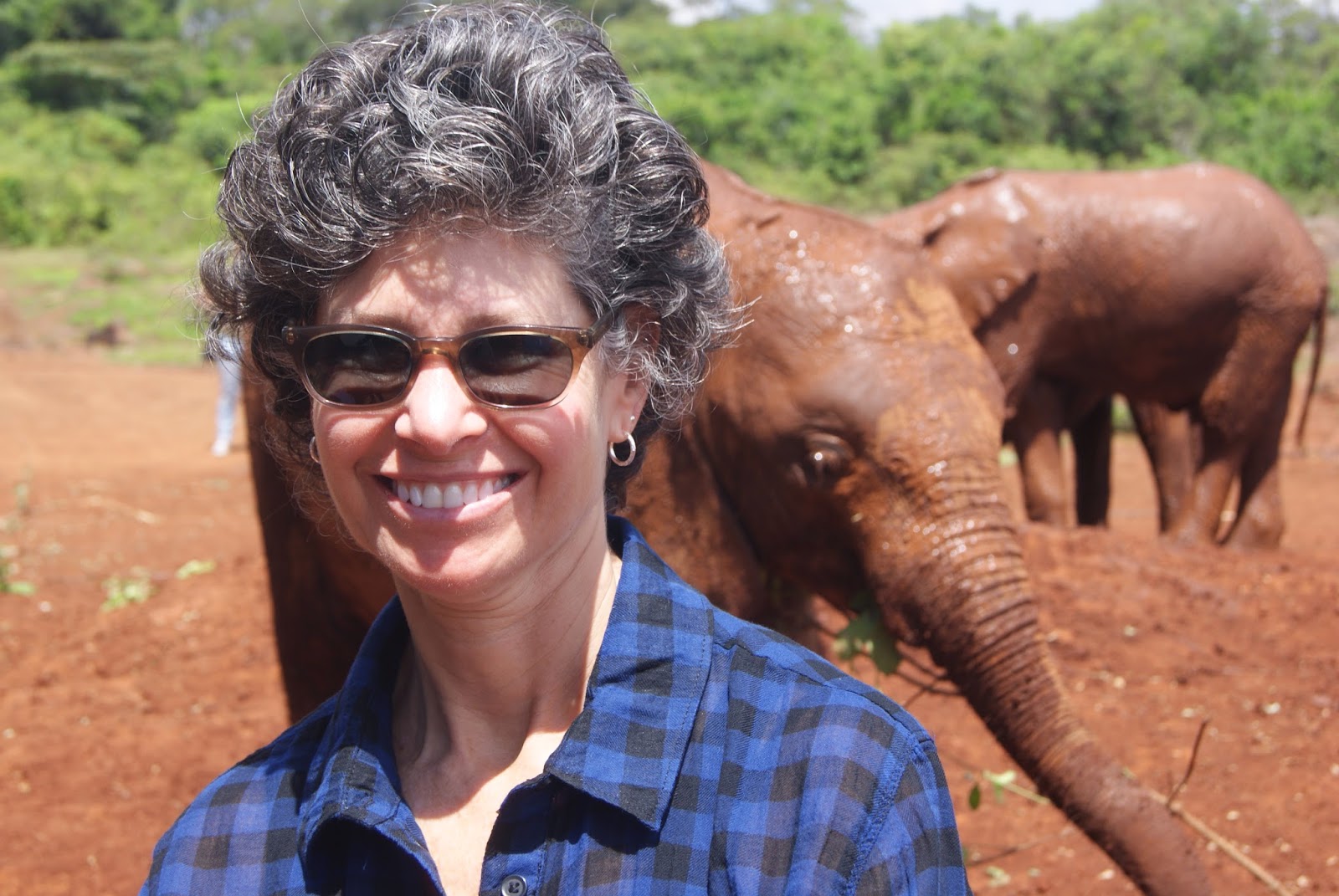
We've learned that Nairobi is a city of great contrasts.  We found the central business district somewhat seedy, as is common in a developing country.  Cell phone stores are ubiquitous.  Just three miles out of town is the beginning of a national reserve, where lions, zebras, etc. roam free.  As we drove near the reserve,  several baboons crossed the road in front of our car.  We visited the Elephant Orphanage, home to baby elephants less than three years old who were rescued because they were injured or their mothers had died due to poaching or natural causes. And, yes, you can adopt a baby elephant—you just can’t and wouldn’t want to take it home. When these baby elephants become three years old, they are taken out to one of the national park reserves, so that they can be integrated with and adopted by elephant families.  The process takes another 5-7 years for elephant families to accept the orphans.  We visited the nearby Giraffe Park, where these huge, incredible and beautiful animals ate out of our hands. We lunched in Karen, a suburban part of Nairobi.  The homes were gorgeous—we could have been in Great Falls or Potomac—except each home was surrounded by high walls and overseen by 24 hour security guards.  Adjacent to a nice neighborhood, closer to town, is the worst slum area in Nairobi.  The disparity in wealth is great.

Last week, Don drove about 2.5 hours out of Nairobi to the central part of Kenya to observe a development project.  The countryside is beautiful, with abundant rice fields, banana trees, corn fields and so forth.  The resources in Kenya are amazing.  But the workforce in the rice fields earned about $2-3/day.  In the small towns that he passed, there were numerous kiosks selling a variety of different items.  If each kiosk owner makes $2-3/day, they are doing well.  In Nairobi, a woman doing housekeeping earns about $6/day. While there is a growing middle class in Kenya, the majority make due at a subsistence level.

I spent my week traveling through Uganda. I have never seen such poverty. Things we take for granted—running water, bathrooms, refrigeration, kitchen facilities, paved roads (or cars)--don’t exist for many of those people. Their clothing ranged from none, for the very small children, to blankets draped around farmers or herders, to clothes that could have been donated by you or me.  Regardless, each greeted us with a handshake and a smile; except for the small children, who sometimes cried because they had never before seen a white person.  The capital, Kampala, was the opposite; it was dominated by severely heavy traffic, thick morning smog and row-after-row of shanty-businesses. An interesting experience, but I was happy to return to Kenya.    

The Kenyan newspapers have robust political discussions.  The current debate involves the security laws being considered by Parliament with would give the President expanded powers to deal with the terrorist threats.  The new proposals would permit wire-tapping of telephones and would prohibit journalists from printing information that would undermine national security.  The issues being debated, such as limitations to privacy and freedom of the press, to address security risks are not that much different than some of the debates going on in the U.S.  Every day the newspapers carry articles about corruption. It is clearly endemic to the society; but little is done to change the situation.  Yesterday the newspapers carried an article about girls who were circumcised.  It is outlawed in Kenya, but continues in many areas. The parents were quoted as saying that the government should not interfere.


What is striking to us most of all is how nice and welcoming the Kenyan people are.  We have met many wonderful people in our short stay here. 


Posting 2: Day 1 and Day 1

12/01/14

Day 1 in Nairobi
After a very long night, Don and I landed at the Nairobi airport at around 4:00 Sunday morning.  Our hired driver was nowhere in sight. We were exhausted at that point (me more so than Don, as he had been upgraded to Business Class from Istanbul to Nairobi--I'm still pissed about that!)  I had suspended my phone coverage and Don's phone battery was very low.  This was a problem as we had been cautioned not to take a taxi--only use the contracted drivers. After a few stressful calls, our driver appeared.  He had fallen asleep in his car!

While the drive to our lodging was similar to the first phase of many far away trips previously taken, the significance of this trip finally hit me.  I immediately felt homesick and missed my family. Thank goodness for Skype, email and cell phones.

We spent our first afternoon at a Thanksgiving dinner at the NGO Regional Director's home. He and his family live in a lovely house with a beautiful garden and 24 hour security. We were welcomed by a houseful of friendly, enthusiastic expatriates who have lived abroad for most of their careers. It was a lovely afternoon for our first day.

We stopped at the supermarket, loaded up on water and returned "home."  Our apartment is fine.  A one bedroom with a living room and what is advertised as a full-kitchen. Only problem: the appliances don't really work.  The toaster caught on fire and the refrigerator leaks.  Oh well, good excuse not to cook!

Day 1 at work
Our driver picked us up at 8 am, and we started the day with a 8:30 staff meeting, followed by a comprehensive security briefing. I must admit, I was overwhelmed, but I also appreciated the care and caution provided.  Regardless of where we are, if we experience ANY trouble or problem, we have a security person to call.  The rules are very different here--only use designated drivers, do not carry a purse, don't go out after 6 pm unless your driver takes and picks you up, stay out of certain parts of the country--but people seem to do fine as long as they follow the rules.  Rest assured--we'll be following the rules!

The NGO Kenya Director took us to lunch at a pizza restaurant near the office.  Looking around and eating the pizza, we could have been anywhere in the US. So many things here are the same as home, but the differences are important to pay attention to.

To be continued....


Wednesday, January 7, 2015

Posting 6: Safari!

1/7/15

Over the holidays, we went on a Safari in the Masai Mara National Reserve, the southwest part of Kenya on the Tanzania boarder. It is connected to the Serengeti in Tanzania.  During the summer, millions of animals migrate from the Serengeti to the Maasai Mara.

In our jeep, we were able to get extremely close to many animals, including lions and their cubs, cheetahs and giraffes.  We also took several bush walks with two Masai tribesman protecting us with riffles.  We also visited a Masai village and got a glimpse of the culture and Masai way of life.  It was a fascinating and wonderful experience.

Here are a few select pictures of our trip.


Monday, January 5, 2015

Posting 5: A new grandson!

1/5/15

Sorry we haven't posted in a while, but we've been with little or no internet access lately.  We were off on a Safari and up at Mt. Kenya.  We'll be posting pictures of our trip later this week.

We wanted to devote today's blog to a much more important topic: the birth of our new grandson, Tyler Jay Schreibman.  We're so excite to welcome him to the family. Mom, dad and baby are all doing well.

Before we left home, we knew the most difficult part of being away would be how much we would miss our family and friends. And that has definitely proven to be true, especially during life-events like the birth of a baby.  Thank goodness for Skype and FaceTime, which have allowed us to keep in touch on a weekly (or more often) basis.  One of our kids, Brian, says that because of FaceTime he actually "sees" more of us now that we're in Africa! Many of you have continued to communicate via email, which we very much appreciate and encourage you to continue.

Don and Bobby

Monday, December 22, 2014

Posting 4: Settling in

12/22/14

Each day, we are reminded of the similarities and differences between our Kenya and US lives.  Last week, we attended an off-site meeting at Lake Naivasha, a conference meeting site about 90 minutes outside of Nairobi.  Team building, ice-breakers and PowerPoint presentations felt like déjà vu.  Except that….our team building was observed by a flock of enormous Marabou storks (60 inches high, weighing 20 pounds each, with a wing-span of 12 feet) and a group of rhinos! A peacock greeted us as we entered our conference meeting room, and a monkey peeked into the window during the presentation.  On our drive home, a zebra crossed in front of the car, just like a deer might do in Virginia.  Just another normal day in Kenya!

Although not unique to Kenya, we are often struck by the ambition and drive of many of the African people we meet. Talking to many about their pasts and futures, two stories left a strong impression on us.  One co-worker described how he had to bribe his way out of Eritrea, his homeland.  Apparently, educational opportunities are limited and all citizens are required to serve in the military for an undetermined period of time.  We've heard that these and other difficult living conditions in Eritrea have resulted in many people emigrating.

Another Kenyan friend reached out to Don for business advice.  Orphaned at age five, he lived with his grandmother and proceeded to care for her once he became a teenager.  Unable to afford college, he purchased one laptop, than another, and subsequently established a small IT business in his village. Now, while working fulltime in Nairobi, he and his wife are growing a lunch-delivery business on the side.  She prepares lunches for 32 people at $1/each/5-days a week. They pay two workers $4 each for 4-hours work. They are hoping to expand to 100 lunches/day, and move to a larger kitchen. His motivation and determination will ensure he succeeds.

This week Parliament passed an anti-terrorism law which was very controversial. While strengthening some laws regarding terrorism, it also undermines important civil rights and free speech. People feel very strongly for or against the law, but the divisions here are based on ethnic-tribal background and loyalty, rather than on ideology. Fist fights broke out in Parliament and there was a tv blackout while the vote took place.

On Friday, we leave for a Safari in the Masai Mara Reserve.  Stay tuned for some great pictures.

Don and Bobby